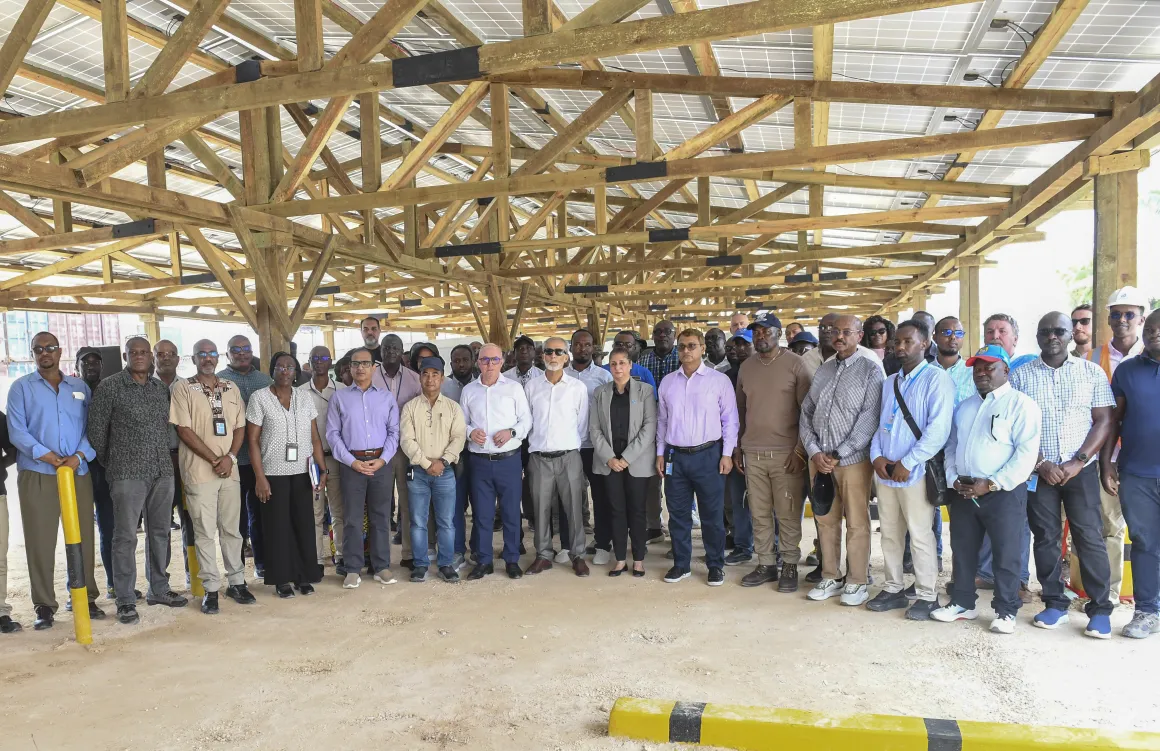
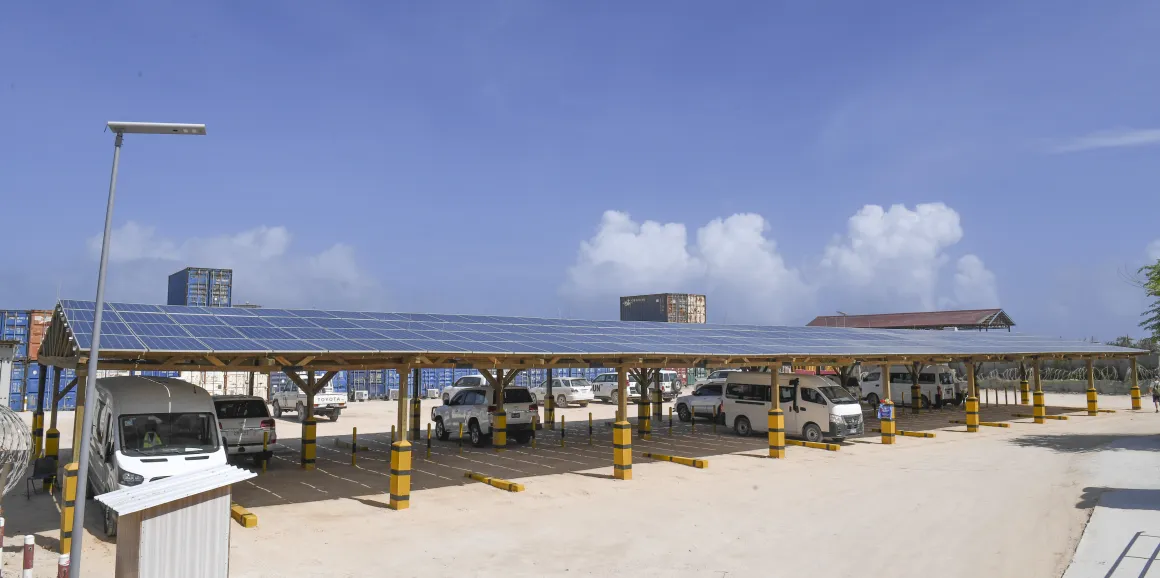
18 October 2026 | Mogadishu, Somalia. The Acting Assistant Secretary-General and Head of the United Nations Support Office in Somalia (UNSOS), Ms. Qurat-ul-Ain Sadozai, inaugurated the Solar Farm Parking at the UNSOS Mogadishu Compound this Sunday, marking the completion of an innovative project that combines renewable energy generation with increased shaded parking capacity. The initiative demonstrates how practical, cost-effective solutions can deliver multiple benefits, strengthening operational infrastructure and long-term energy security, reducing fuel consumption, generating maintenance and vehicle fleet cost savings and advancing environmental sustainability across Mission operations while supporting the African Union Support and Stabilization Mission in Somalia (AUSSOM) and the Somalia Security Forces (SSF).
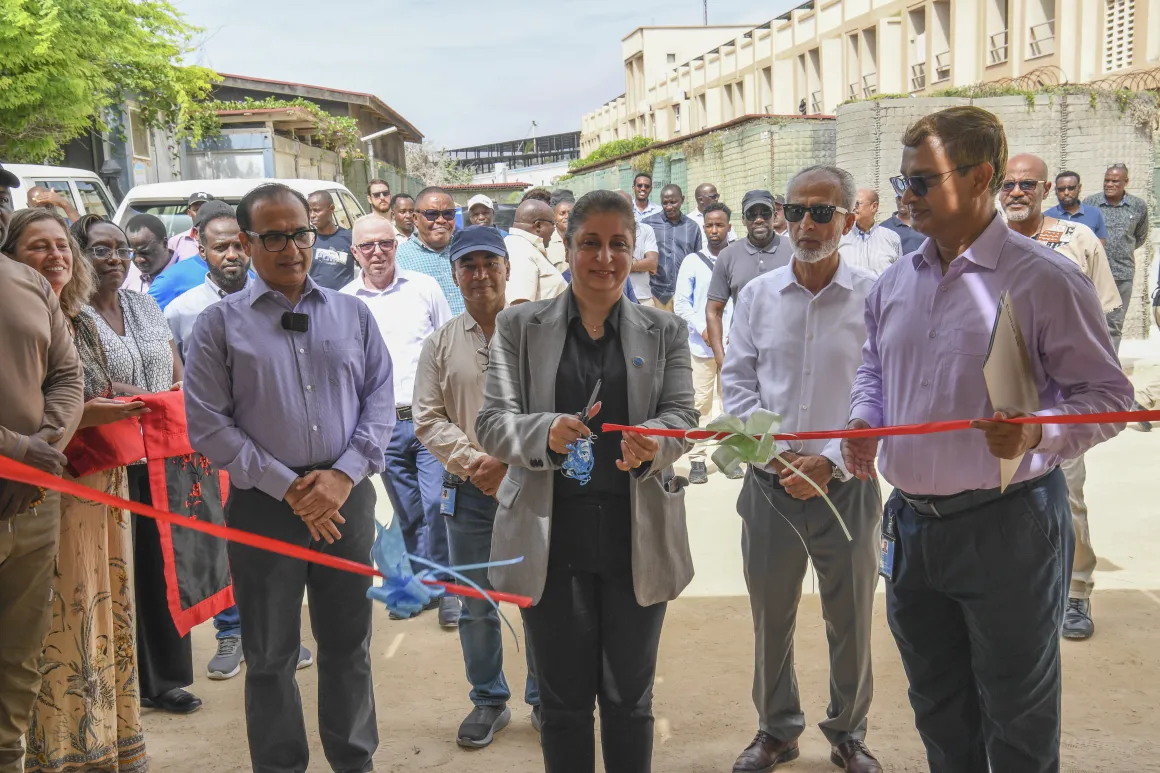
At the inauguration ceremony, Ms. Sadozai commended all those involved in bringing the project to completion, recognising their collective efforts and the positive impact the initiative is expected to have. She also announced plans to extend the initiative through a second phase.

“This is the time when we really show that the UN can make it happen, even in the direst situations. We deliver, we maintain our mandate, and we do it through innovative programmes and projects that allow us to demonstrate the value of this institution. This particular project, you might think it is a small project, but it has significant value. If we are able to demonstrate that we are doing an investment that adds value by saving fuel, resources, and yet delivering on our mandate and saving the environment, that is a huge achievement."
The project was delivered through close cooperation across the Service Delivery Pillar, with technical contributions from the Engineering Section, the Transport Section which oversees the AUSSOM Mission Enabling Unit, and Environment Unit, alongside AUSSOM and contractor Deeqa. Using internal resources, including recycled solar panels and existing materials, the initiative advances Somalia’s environmental sustainable development objectives of clean energy and strengthens national capacity through local employment, helping create a lasting legacy for the country.
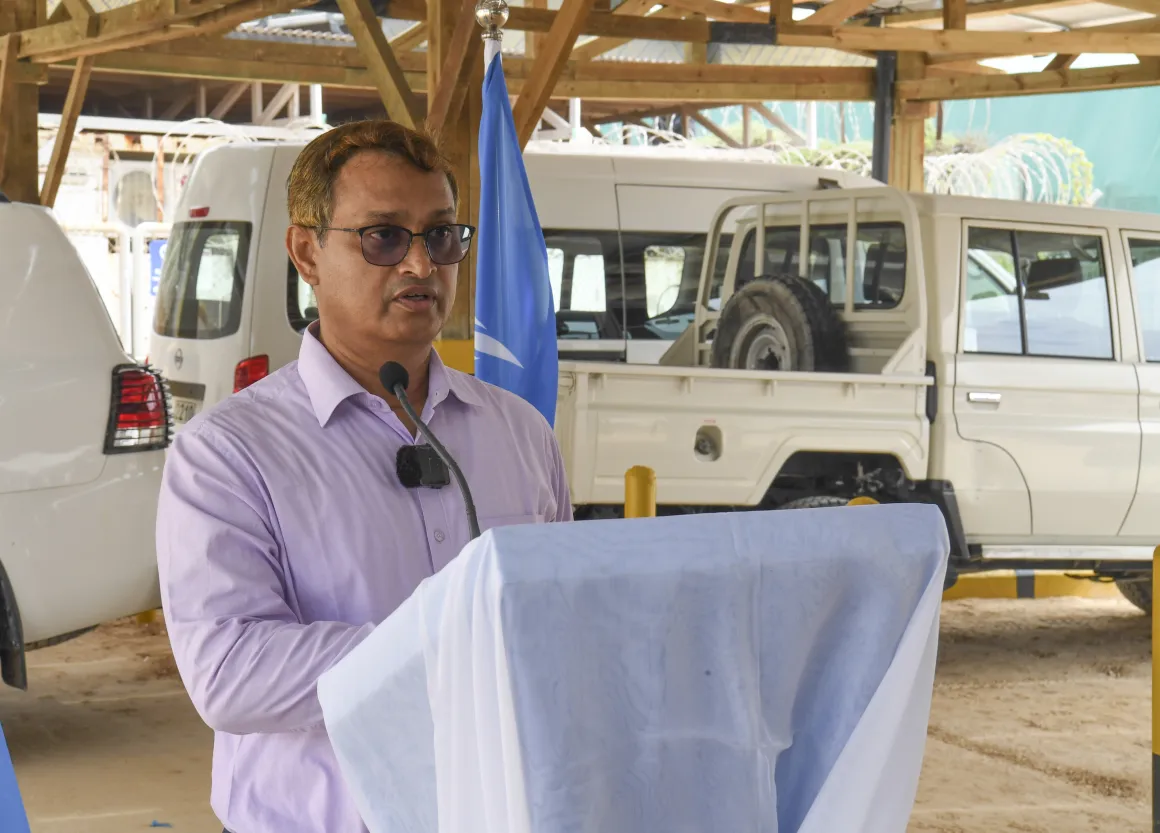
Providing further details on the project’s scale and expected benefits, the Officer-in-Charge of the Service Delivery Pillar, Mr. Ali Azam, highlighted its energy generation capacity, environmental impact and operational savings. “The completed project consists of 368 solar panels and provides parking for 32 vehicles. This facility is expected to generate 175,200 kWh of electricity per year, reducing annual carbon emissions by 140 tons, while also delivering notable savings in fuel consumption, by approximately 50,000 litres per year."
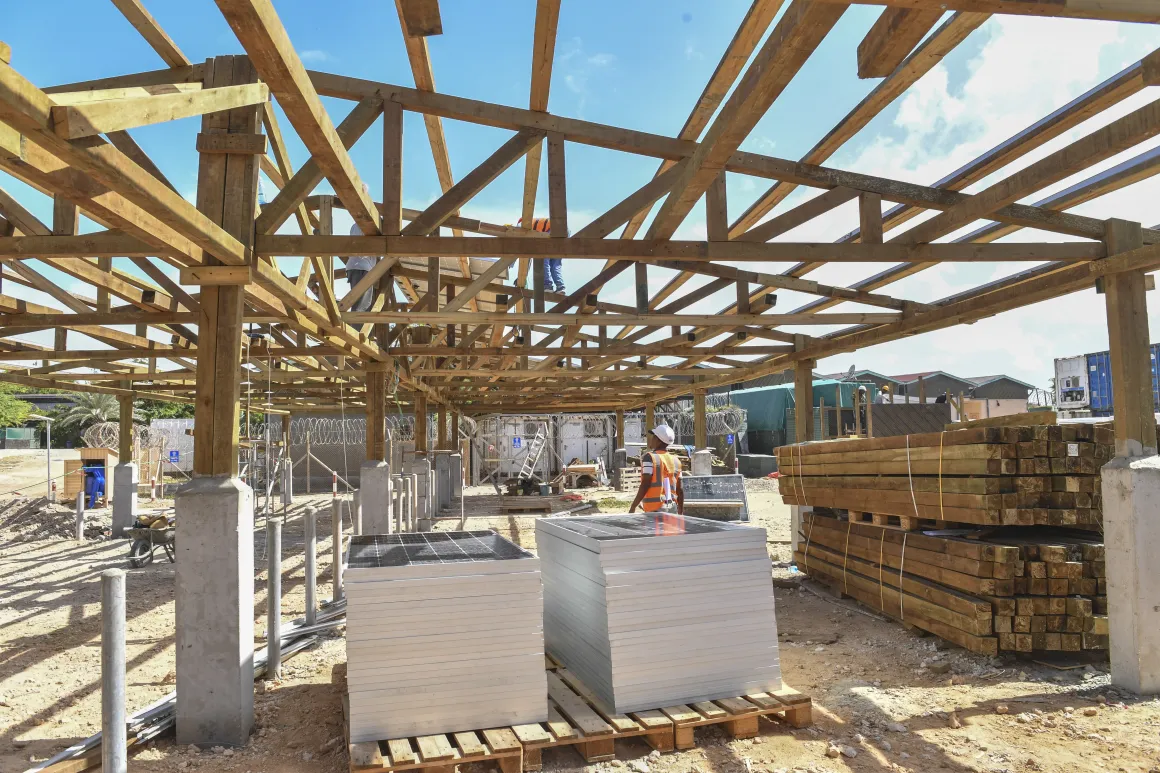
Integrated into the compound’s electricity grid, the solar farm will reduce reliance on diesel-powered generators, helping improve local air quality while advancing UNSOS’ environmental objectives and Somalia’s clean energy ambitions. Reflecting on the broader benefits of renewable energy, Mr. Richard Oyoo, Chief of the Environment Unit, highlighted its positive impact:
“By reducing the use of diesel generators, we are reducing air pollution and contributing to environmental sustainability. By reducing runtime, we are lowering noise pollution, improving air quality and, overall, we are contributing to the climate goals. By using solar energy, we are avoiding carbon emissions, as well as contributing to the Government of Somalia Sustainable Development Goals of clean energy.”
Innovation Through Collaboration
By bringing Engineering and Transport together, UNSOS turned a space constraint into an opportunity to combine vehicle parking with solar power production. Mr. Muhammad Farooq Sabir, Officer-in-Charge and Chief Engineer, explained how the teams developed the solution:
“It is a benchmark of an example of the coordination between two sections. Transport needs space for parking, we need space for the solar panels and there is a space constraint in the camp. We worked together and came up with this solution”.
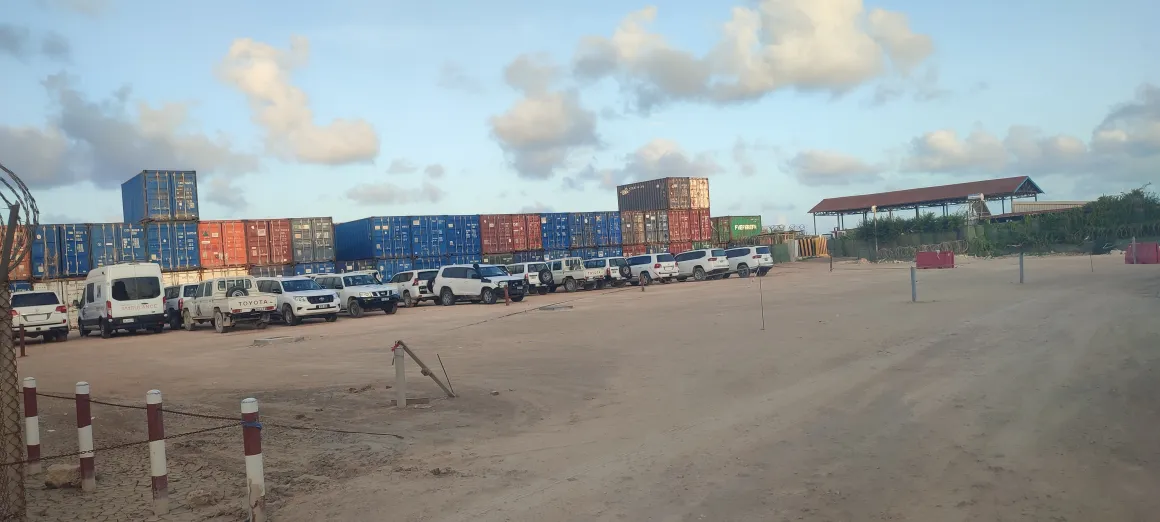
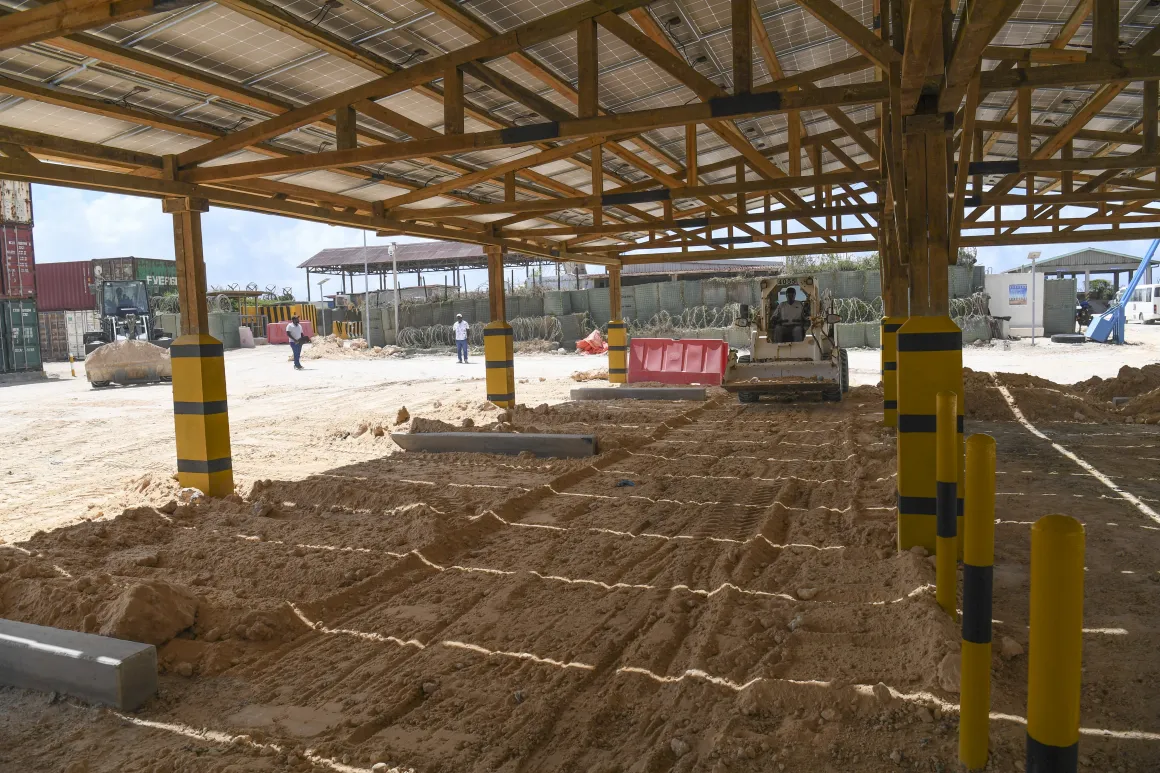
For Ms. Manon Richard, Chief of the Transport Section, the solar Farm Parking doubles parking capacity to 64 spaces (32 covered and 32 uncovered) while protecting fleet assets from Somalia’s harsh coastal conditions, where humidity, salinity and intense sunlight accelerate deterioration. “By providing shade and protection, we are going to save on maintenance and repair costs and extend the life of our vehicles,” she explained.
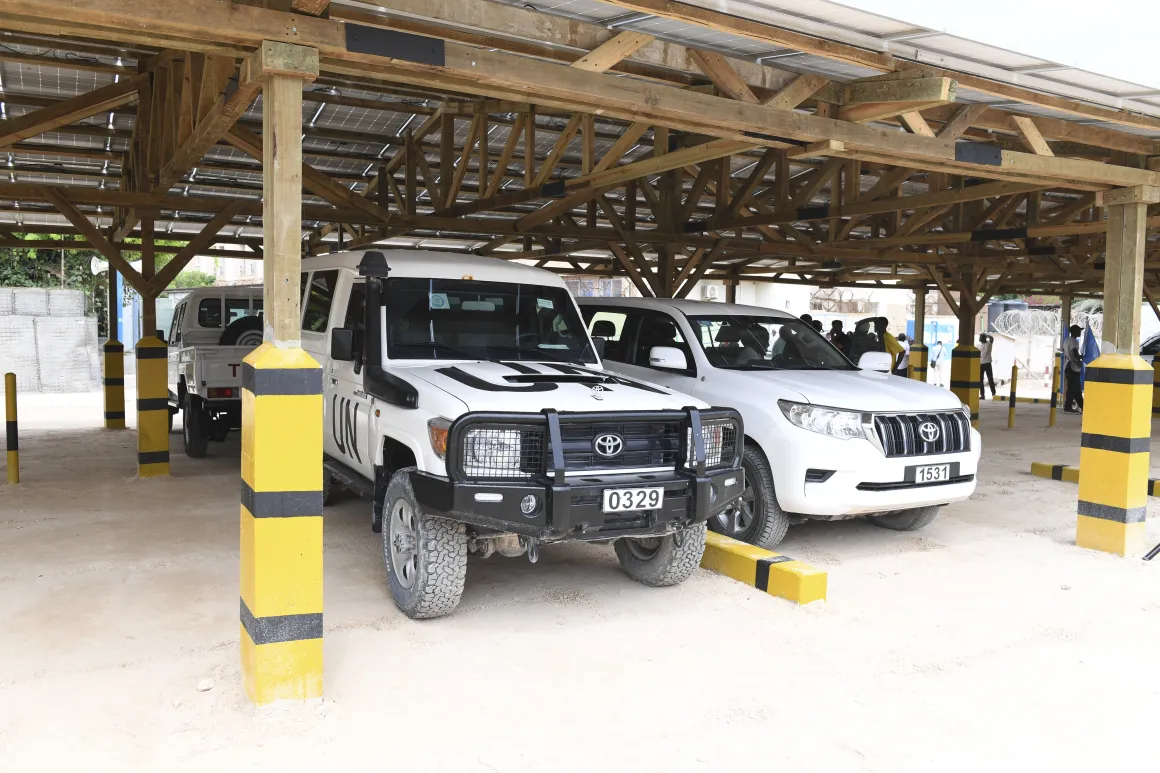
The 40-metre-long timber structure features a double-pitched roof set at a 12-degree angle to maximise sunlight exposure, facilitate natural rainwater drainage and help keep the panels free of dust, as explained by Engineer Brima of contractor Deeqa. He also highlighted the installation’s energy potential, estimating that it will generate enough electricity to power approximately 5,294 LED lights or between 20 and 30 standard office spaces.
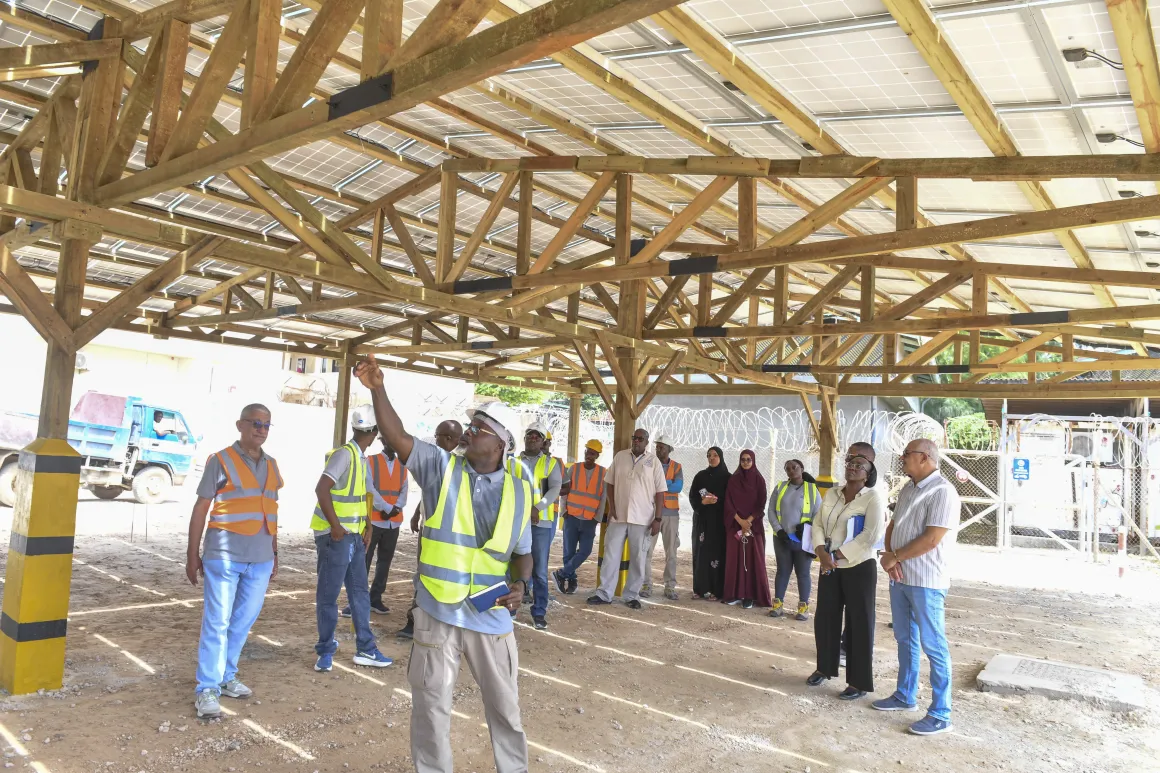
The installation is expected to increase the Mission’s green energy contribution by 3 to 5 per cent, while providing long-term benefits beyond UNSOS’ presence in Somalia. Mr. Sabir highlighted the long-term value of the investment, saying: “Having solar power here, is something which will benefit whoever will take over the camp after we have left, because they will not feel the impact of international politics or fuel economy. The legacy, we are leaving behind is a renewable energy source”.
Building Local Capacity and Leaving a Legacy
Beyond increasing renewable share and operational infrastructure, the Solar Farm is helping to develop local expertise that can be applied to future construction and renewable energy initiatives.
“Of the people working here, only two or three are international supervisors. For the local workers, this is a good training ground for them to learn these skills. Whenever we work, we involve the local population so that we leave a legacy”, emphasised Mr. Sabir.
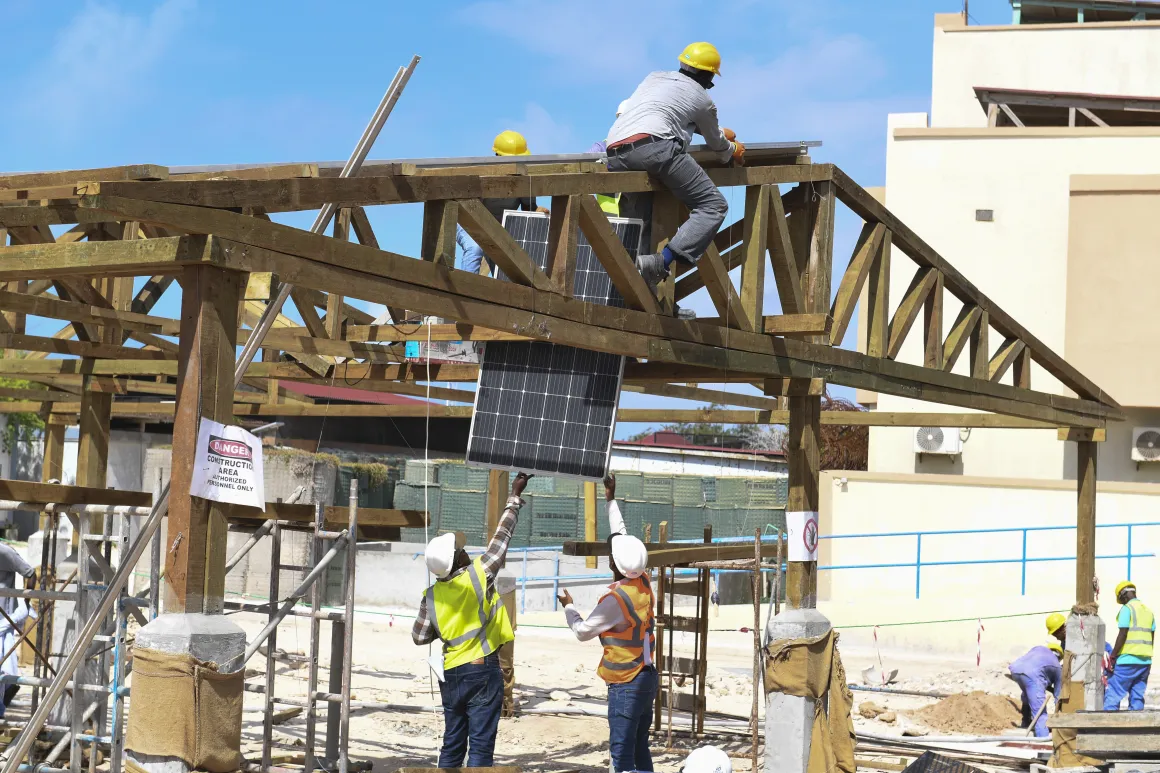
The same emphasis on knowledge transfer extends to the installation and operation of the solar systems. “The people who constructed the panels have acquired knowledge, and the people who will operate the system are also learning,” said Mr. Oyoo. “We are leaving behind knowledge as a legacy that can be applied in future projects.”
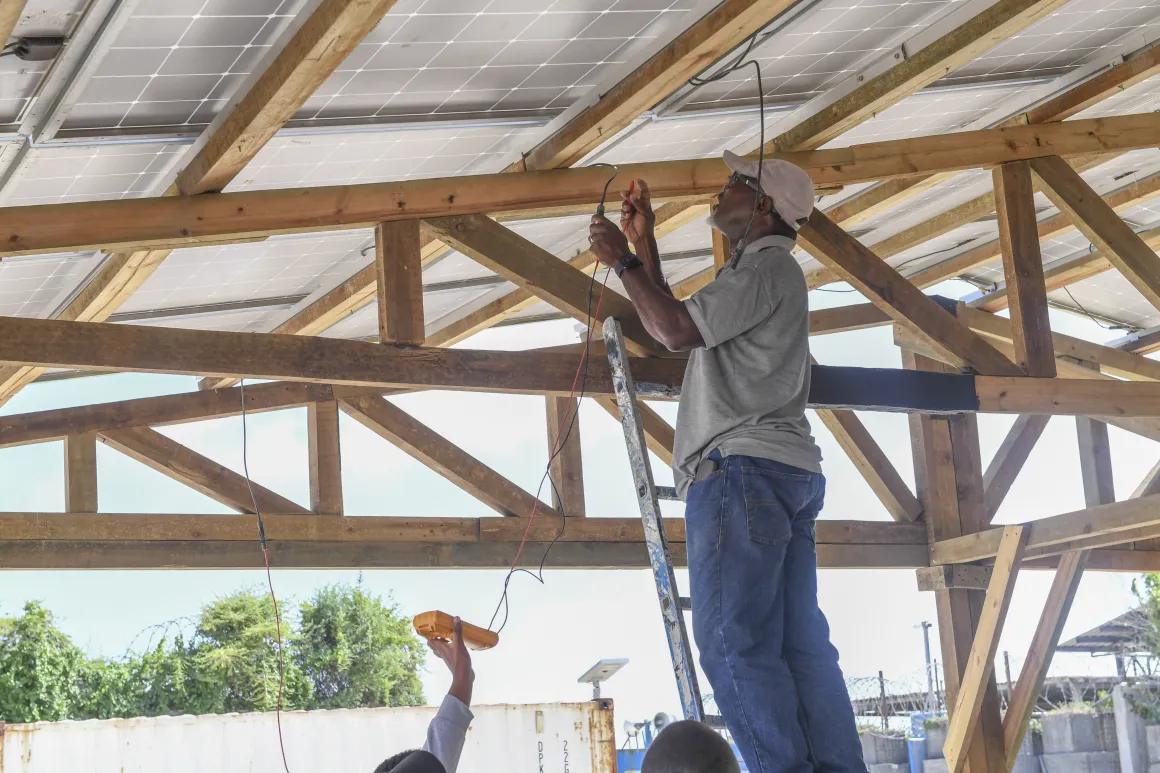
The project also provides practical training opportunities for AUSSOM transport operators and personnel from the Mission Enabling Unit, which supports convoys travelling to sectors across Somalia. The skills gained in Mogadishu can be applied in the field, strengthening operational capacity while making effective use of existing resources.
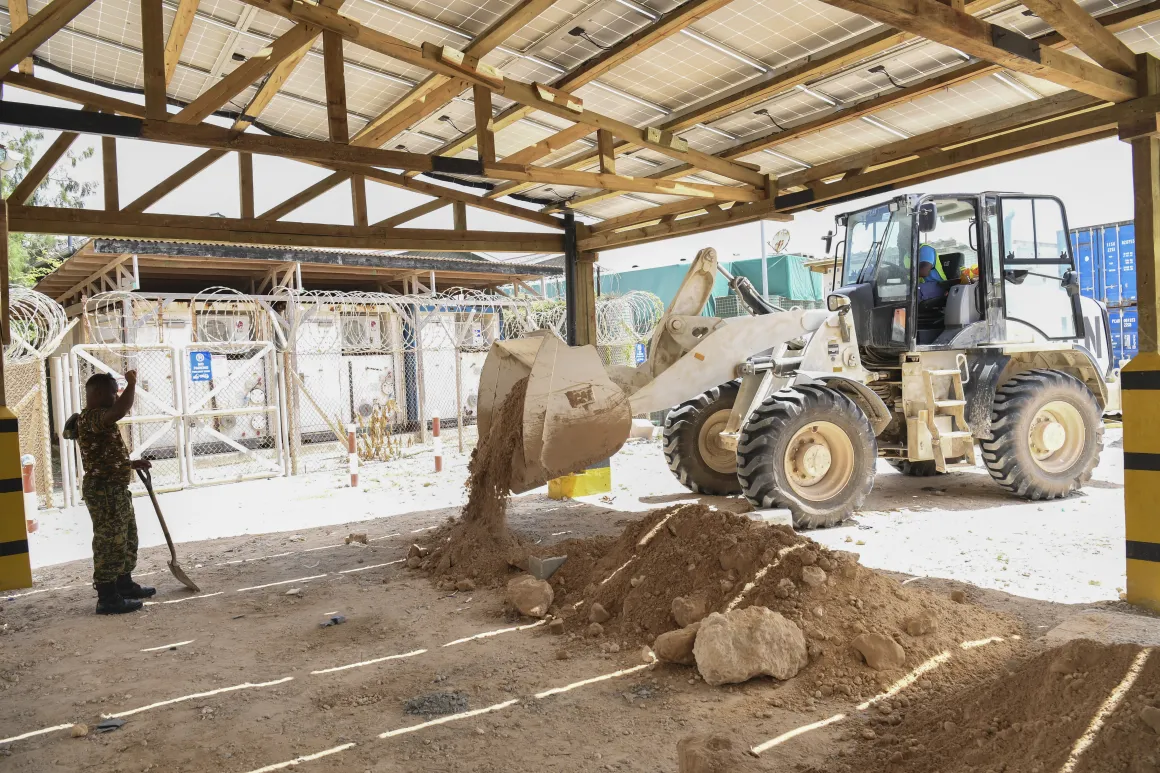
“It is s also helping us train the operators from the Troop Contributing Countries, the transport operators and the Mission Enabling Unit that supports convoys to the sectors and contributes to the overall AUSSOM objectives and mandates,” said Ms. Richard. “In the end, we are also training the operators, and so we are using this as both a training ground and a cost-saving opportunity for us.”
A Model for Future Projects
The Solar Farm Parking demonstrates how innovation, collaboration and sustainability can address multiple operational needs through a single integrated solution. By making effective use of existing resources, producing clean energy, protecting fleet assets, expanding parking capacity, reducing emissions and developing local expertise, the project delivers tangible operational, environmental and capacity-building benefits.
As UNSOS continues to advance its sustainability agenda, the project demonstrates a practical model for how integrated solutions can support mission operations while contributing to environmental stewardship, energy resilience and long-term capacity-building in Somalia.