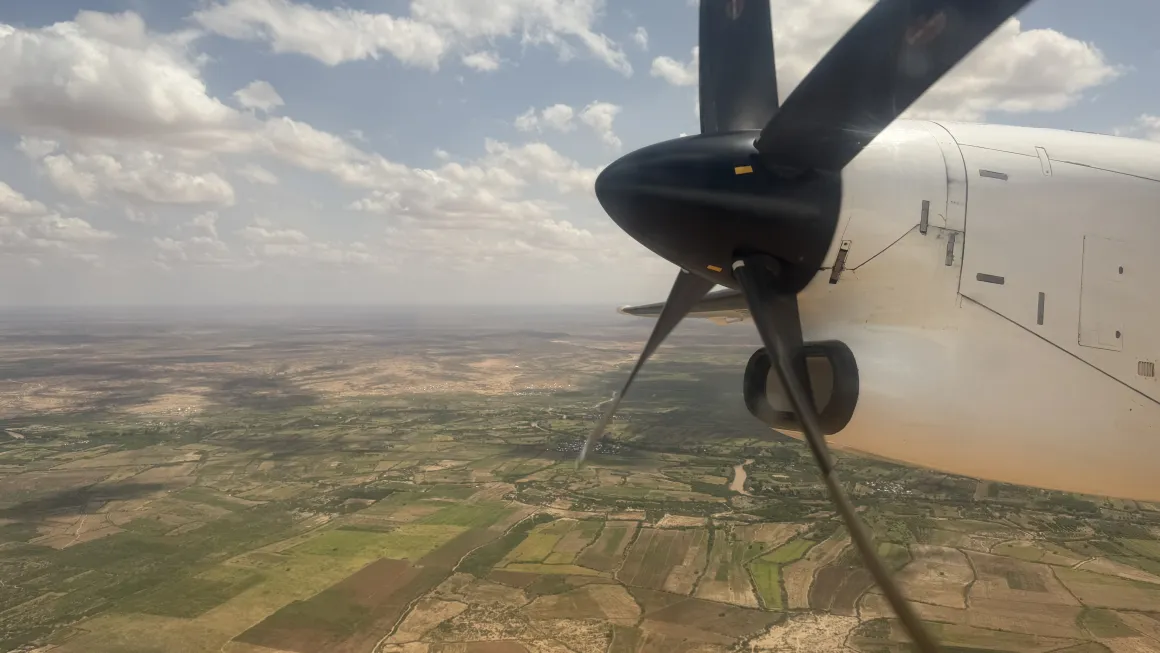


Inside Beledweyne Air Traffic Control (ATC) Tower, Sector 4 Headquarters, air operations are underway, managed by the Somali Civil Aviation Authority (SCAA). Behind each radio transmission lies a complex system of skilled personnel, innovative infrastructure and continuous capacity building, brought together through the logistical support of the United Nations Support Office in Somalia (UNSOS) as part of its mandate to support Somalia’s security transition.
It is Wednesday morning in Beledweyne. A UN aircraft is on approach, and the radio comes alive.
Beledweyne, UN Oscar 6-6-0 Papa.
The response is immediate.
6-6-0 Papa, Beledweyne.
At the VHF handset is Somali Civil Aviation Authority (SCAA) Air Traffic Controller Mohamed Nour Hassan. For nearly four years, he has helped coordinate the safe movement of aircraft across central Somalia, providing essential flight information that supports safe operations in Somali airspace.
Coordinating every Arrival and Departure
At Beledweyne, air traffic coordination begins well before aircraft are visible from the tower. Categorised as a Category D facility, the ATC tower in Sector 4 is managed by the Somali Civil Aviation Authority (SCAA), providing flight information services -weather, current security update and Notice to Airmen (NOTAM). Here, SCAA personnel are mentored on the job by AUSSOM-certified Air Traffic Controllers from the Djiboutian contingent, with UNSOS facilitating the partnership as part of efforts to strengthen Somali-led aviation capacity.
Around ten minutes from landing, pilots contact the tower for landing clearance using VHF frequency for communications. Somali Aviation personnel ensure pilots receive accurate updates on weather and actual conditions of runaway to support safe landings.
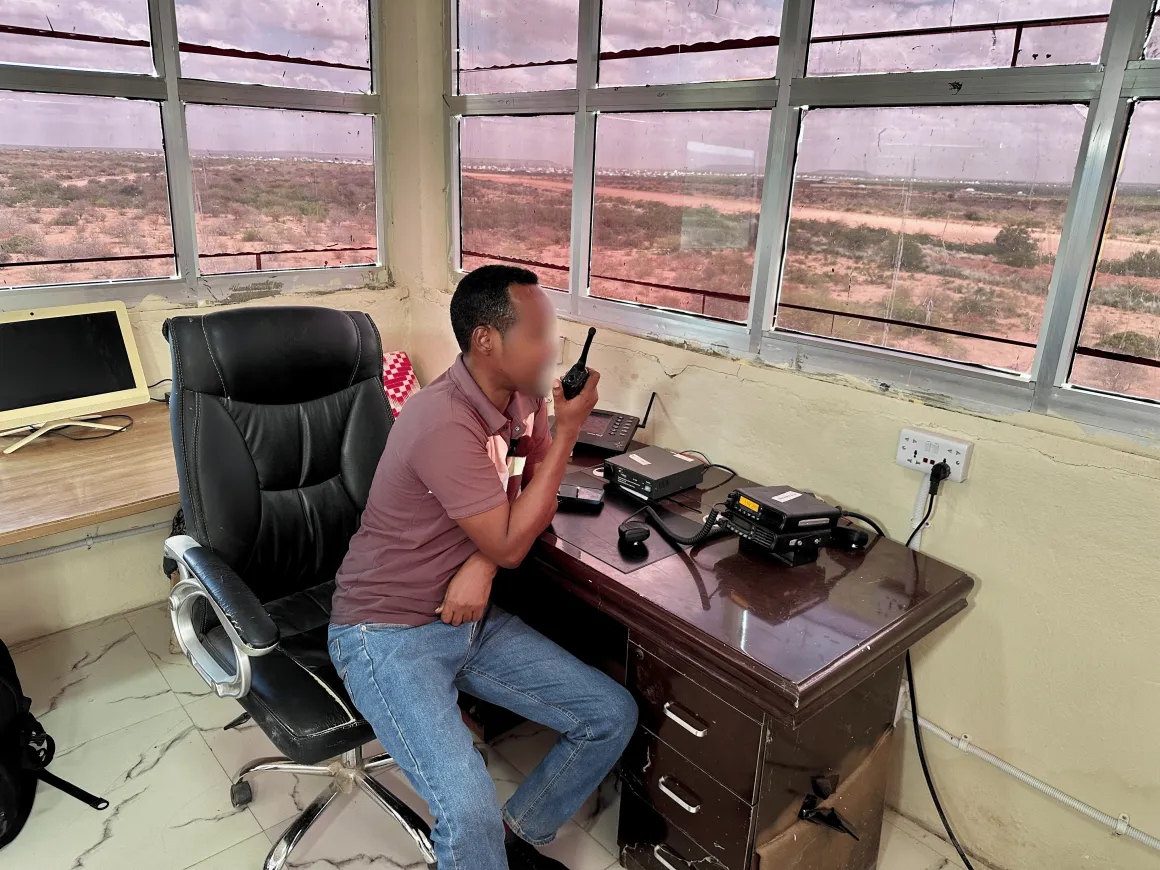
“They are calling the VHF, or the Walkie Talkie, and I give the ground information: wind direction, wind speed, clearance, and also the safety of the runway,” says Mohamed Nour Hassan.
A typical exchange reflects the precision of the operation, as UN Oscar 6-6-0 Papa communicates with the ATC tower: “We are inbound from Dhusamareeb. On the descent of 9,000 feet, we have 50 miles to run…we estimate arrival time of 09 31. 5 crew, 1 passenger - 6 onboard.”
“Continue approach. Continue descent to minimum. Next report, right base runway 22,” responds Hassan.
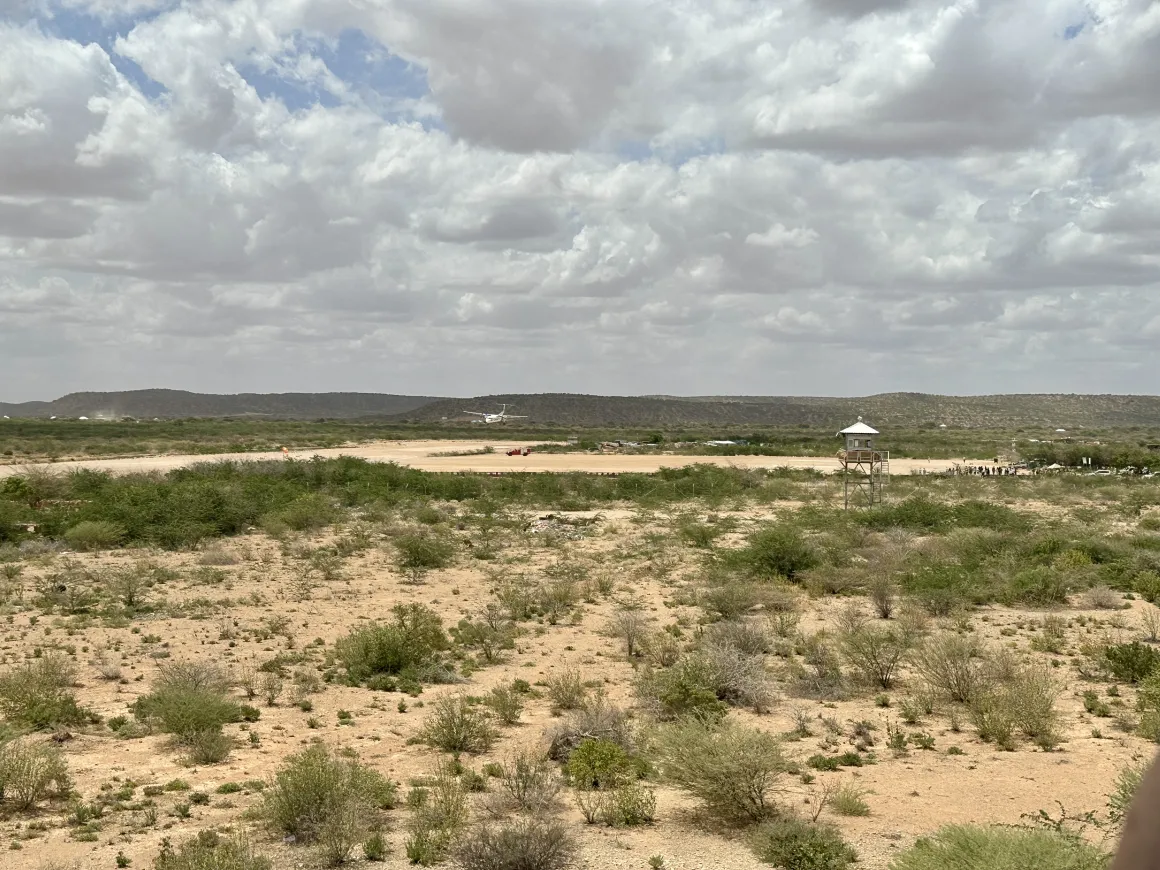
As aircraft close in, coordination extends beyond the tower. Hassan works closely with ground crews as fire and rescue teams move into position and stand by. Runaway inspections are carried out, and Aviation ground teams prepare for landing operations. Any hazard is immediately relayed to pilots, ensuring swift action. In this tightly synchronised environment, every movement on the ground is directly linked to safety in the air.
Training that Translates into Real-life Practice
This level of coordination is reinforced by continuous capacity building programme, ensuring that skills are strengthened and immediately applied in daily operations. For instance, in June 2026, UNSOS delivered an Air Liaison Officer (ALO) training in Beledweyne, bringing together 32 participants from the African Union Support and Stabilisation Mission in Somalia (AUSSOM), including Djiboutian and Ethiopian contingents, the Somali Civil Aviation Authority (SCAA), Arima Aviation Services, a national ground handling services provider, and the World Food Programme (WFP) Somalia.
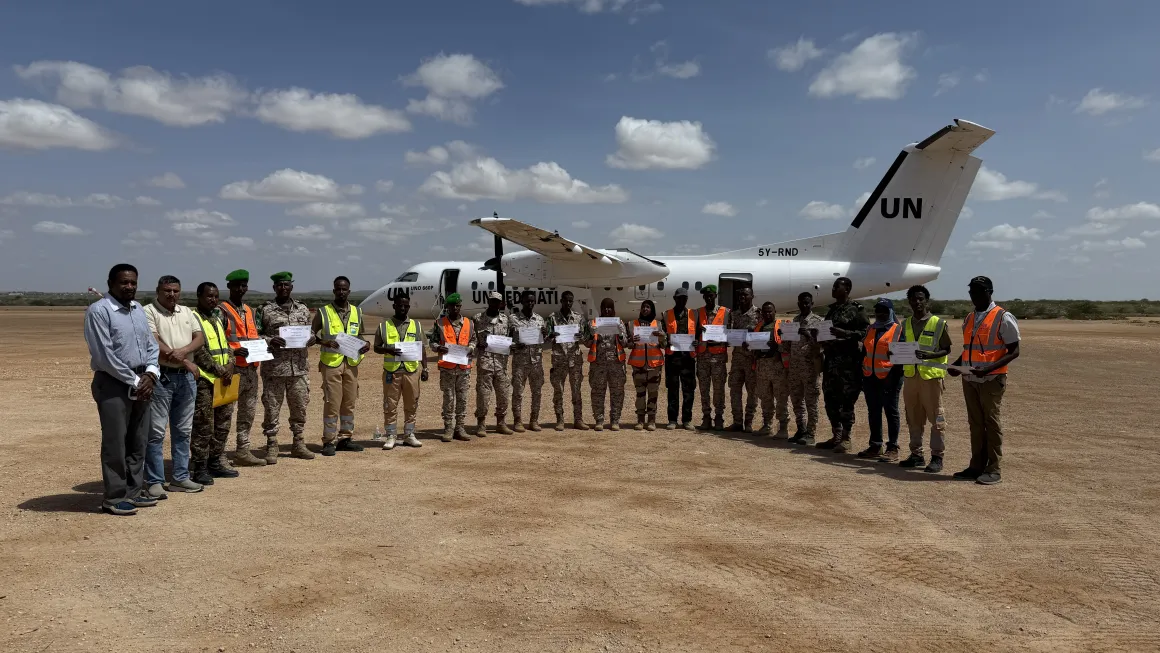
Aden Mohamed Ali, Airport Manager in Beledweyne, is one of the participants. He has been working at the ATC tower alongside Hassan for the past three months, applying skills gained through UNSOS on-the-job training. His experience reflects the impact of UNSOS training, visible in the day-to-day operations of SCAA staff.
“I have participated in the ALO training provided by UNSOS. First, I thank UNSOS. We learn about air traffic management, responsibility of air traffic and ATC, aviation security, weather situation. We learn firefighting operations and so on”, highlighted Ali.
The course strengthened a wide range of operational competencies across safety, coordination, emergency response and flight operations, enhancing participants’ ability to manage daily airport activities more effectively.
He also underlined how the training reinforces cooperation between institutions working side by side at the airport: “We work together AUSSOM, SSF, UNSOS and Civil Aviation. Somali Civil Aviation is the responsible aviation authority, while AUSSOM and SSF is responsible for security and firefighting support. Also, UNSOS is responsible assistance of runway, repairs of runway and training of airport staff.”
Renewal Energy that Powers every Flight
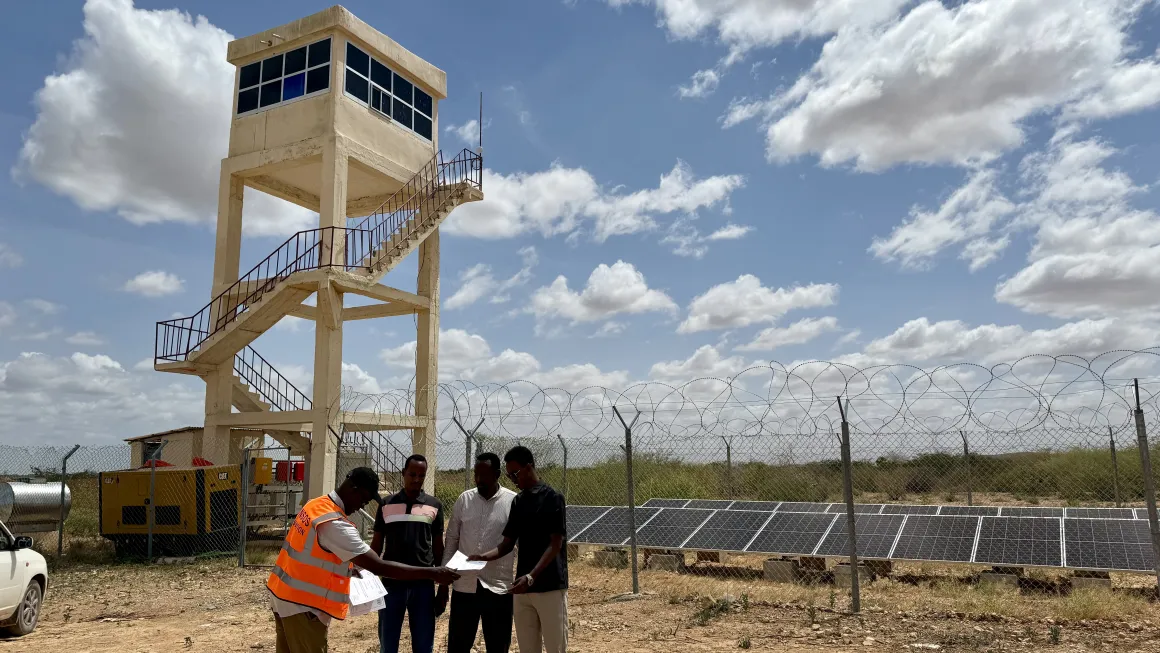
Every radio call and aircraft movement at Beledweyne ATC Tower is now powered by a solar energy system installed by UNSOS and operational since 6 April 2026. With 20 solar panels in place, the tower built and run by SCAA has been transformed into a fully self-sustaining facility, lighting uninterrupted electricity to critical systems including communications systems, computers and air traffic control equipment.
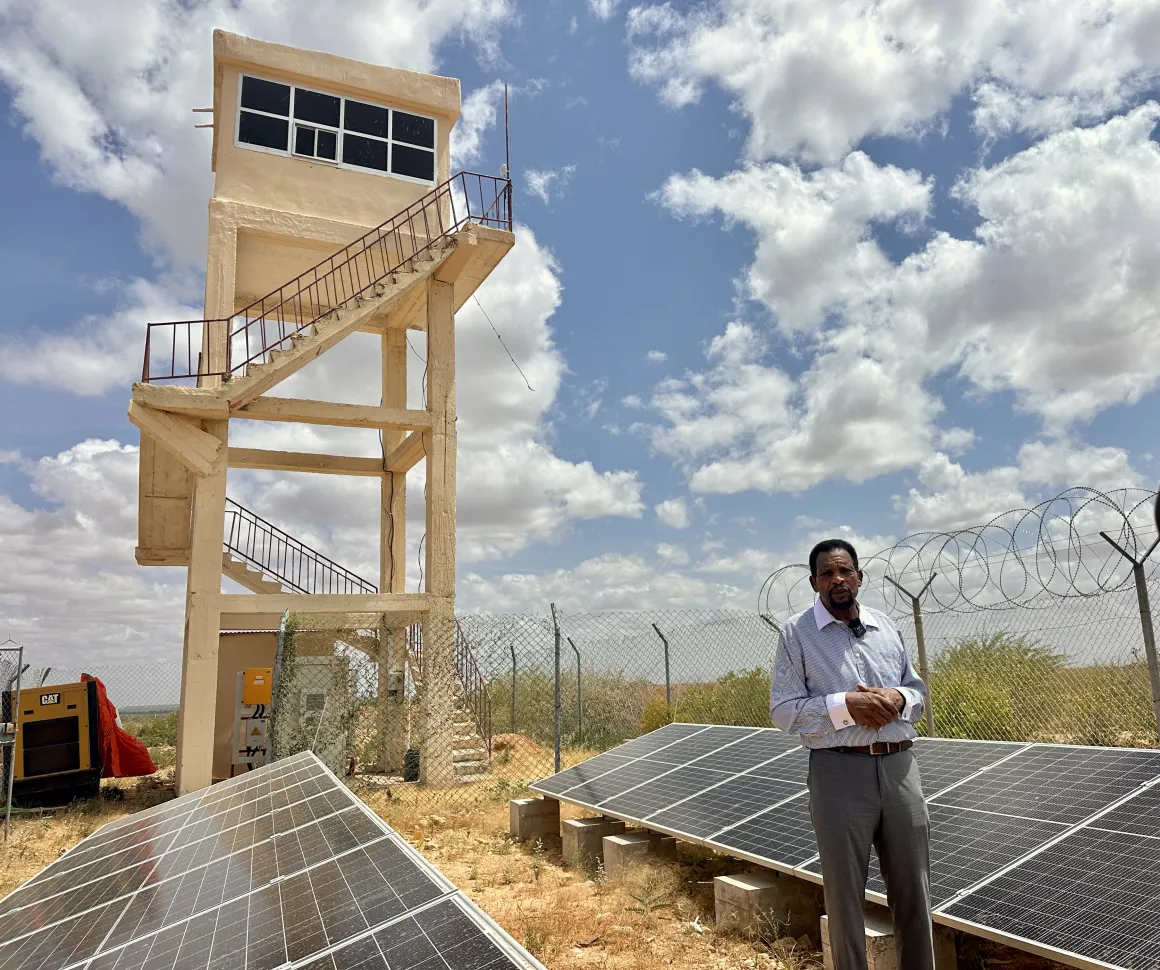
“UNSOS decided to give support to Somali government civil aviation and provide power to this tower, which is very important for air traffic and air safety”, underlined Ogail Ibrahim Elsayed Awad, Regional Engineer with UNSOS Engineering Facility Management Section in Beledweyne.
Designed for both efficiency and resilience, the solar system meets the tower’s operational needs of around four kilowatts while generating up to six to seven kilowatts under optimal weather conditions. Battery storage ensures uninterrupted power during low sunlight and night-time hours. “The tower get power and running, 100% solely dependent on these solar panels, with no other source of electricity other than the solar system”, explains Ogail.
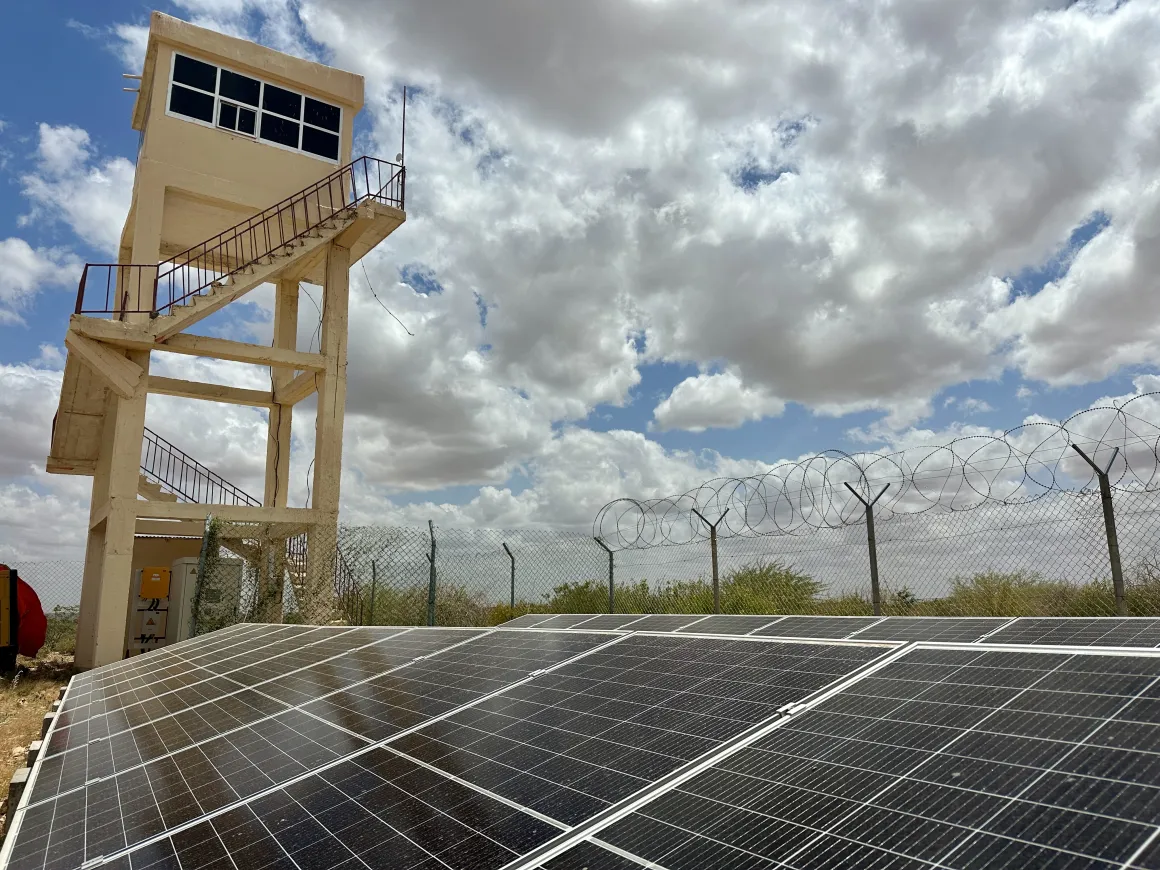
By facilitating operational continuity through renewable energy while reducing dependence on conventional fuel-based systems, the project demonstrates its value as a practical and forward-looking solution for Somalia’s aviation sector and airspace.
Beyond its operational benefits, the initiative stands as a milestone in UNSOS logistical support to sustainable infrastructure, delivering efficient, reliable and trusted power solutions. It brought together multiple UNSOS sections, including Field Technology Services, Engineering and Aviation, working collectively to support the Somali Civil Aviation Authority.
Partnership for a Safety Airspace
Beledweyne ATC Tower reflects the impact of UNSOS logistical support to Somalia. Here, personnel from the Somali Civil Aviation Authority, AUSSOM, the Somali Security Forces and UNSOS work side by side to keep aircraft moving safely and realiably.
Through coordinated air traffic management, hands-on capacity building, innovation and renewable energy, UNSOS is helping strengthen Somalia's aviation sector while enabling safer and more resilient air operations. In Sector 4, every radio call, every landing and every departure demonstrates a partnership that is connecting communities, strengthening Somali-led aviation capacity, and advancing Somalia's security transition.