UN
UN
UN launches 16 Days of Activism campaign to end violence against women in Somalia
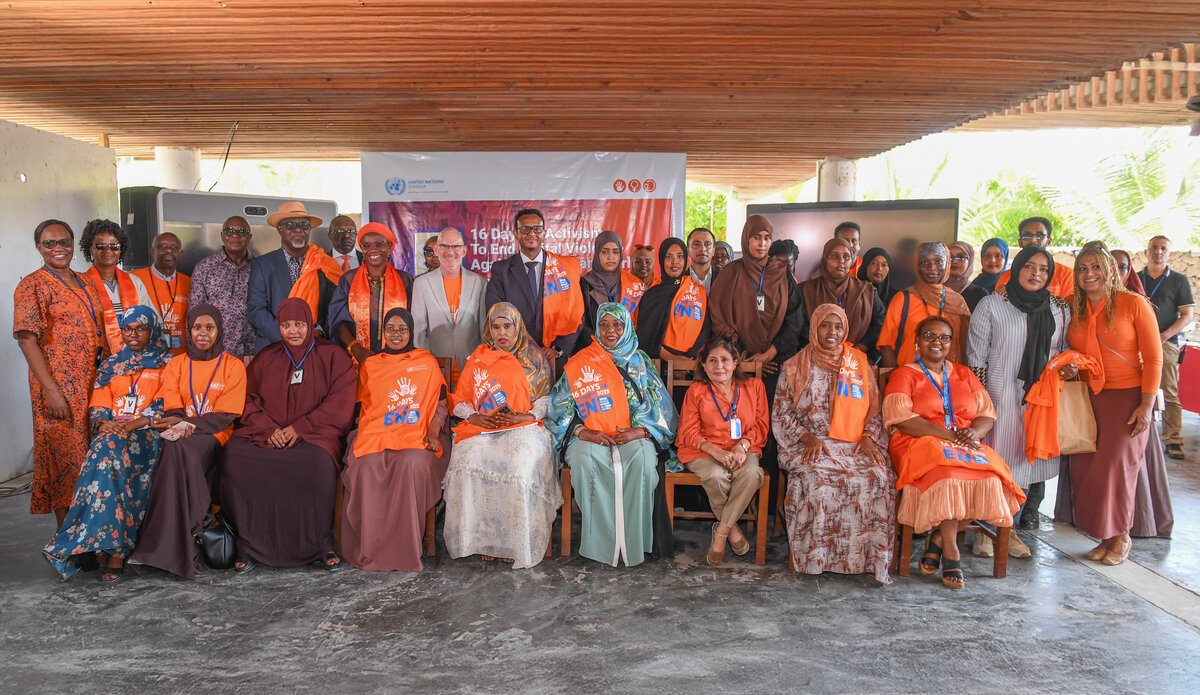
Mogadishu, 26 November, 2025 - The United Nations in Somalia held an event at the UN compound in Mogadishu on Wednesday to officially launch the 16 Days of Activism campaign to end online Gender-Based Violence (GBV) against women and girls. The campaign, which began on 25 November, will run until 10 December—Human Rights Day, marking the adoption of the Universal Declaration of Human Rights (UDHR).
Under the theme “UNiTE to End Digital Violence against All Women and Girls”, the event brought together senior UN and Federal Government officials, including United Nations Special Representative for Somalia (SRSG) and Head of the United Nations Transitional Assistance Mission in Somalia (UNTMIS), James Swan; Officer in Charge (OiC), Head of the United Nations Support Office Somalia (UNSOS), Graan Jaff; and Director, of Foreign Affairs, International Cooperation, Jibril Said Afyare.

The event kicked off with a panel discussion on digital violence, enhancing online safety and mentoring young women, featuring member of parliament, Hawa Sokor Ali, Somali Women Journalists Rights Association (SOWJRA) Executive Director, Leila Osman, and youth activist Mushtaq Muhyidin, who runs a grassroots youth organisation supported by the United Nations Population Fund (UNFPA).

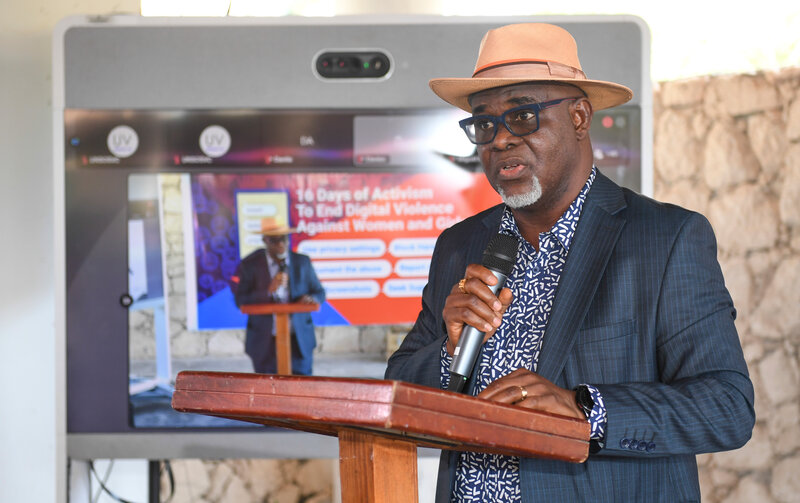
Speaking at the launch event, SRSG James Swan underscored the need for united efforts to protect women and girls against all forms of abuse, including digital violence.
“As members of the UN family in Somalia, we have a clear duty: to protect women and girls, to stand with survivors, and to promote an environment where Somali women and girls can engage online safely and freely. To make real change, we must all work together – government institutions, UN agencies, civil society, tech sector, community leaders and every citizen. We must unite,” Swan emphasised.

In Somalia, increased digital connectivity poses a higher risk for women, with the UN envoy citing a 2022 survey by the Somali Women Journalists’ Rights Association (SOWJRA) that found 71% of over 3,500 women and girls respondents experienced online harassment or abuse.
“Alarmingly, almost a third of the same respondents said they face harassment on the internet on a regular basis. And 39% of those surveyed reported self-censoring or withdrawing from online spaces for their safety,” noted Swan.
OiC Graan Jaff urged more support to women to help them mitigate digital and other forms of abuse, congratulating SOWJRA for developing the UN-supported WEHELIYE (companion) platform to empower women with knowledge on challenges posed by online violence.
“Gender-based violence remains a persistent and deeply concerning issue. Today, this challenge has taken a new dimension, accelerated rapidly by technology. We are witnessing the rise of online gender-based violence that transcends borders and impacts lives globally,” Jaff remarked. “Now is the time for all of us to redouble efforts to prevent and eliminate every form of technologically-facilitated violence. Each of us can play a role in building a safer digital space for women and girls.”

He also highlighted that while UNSOS’ focus is logistical and administrative, it promotes awareness and human rights standards in line with the human rights due diligence policy (HRDDP) in support of the African Union Support and Stabilisation Mission in Somalia (AUSSOM) and the Somali Security Forces (SSF). “The mission also strives to ensure the camps provide a safe environment that considers the specific needs of women,” added Jaff.
In his intervention, Director Jibril Said Afyare, noted that online platforms are increasingly the spaces where women and girls in Somalia face digital abuse, calling for concerted efforts and coordination to tackle the menace.
“Digital violence silences voices, damages confidence and limits the ability of women to participate in society fully. Ending this trend needs a commitment from all of us, government, civil society, tech partners and the community,” stressed Afyare.

During the panel discussion, MP Hawa Sokor Ali, said women leaders and activists face increasing digital abuse on social media, but noted the government’s efforts to tackle the vice through the introduction of the Sexual Offences Bill currently in parliament.

SOWJRA Executive Director, Leila Osman, drew attention to persistently high GBV rates in Somalia, noting that harmful patterns are increasingly reflected online, prompting the development of the WEHELIYE App offering simplified and translated tools to help Somali women.

Meanwhile, youth activist Mushtaq Muhyidin, sensitised girls and women on digital violence and encouraged vigilance when surfing the internet, as offenders often hide behind the veil of digital technology while using various applications.
“For us to protect the girls, we need to educate them so that they know the difference between phishing emails or scam emails and to trust everyone. We all need to know about digital literacy to be able to identify between fake and correct email, the link which is true and a scam link, and we also don’t have to always click on links, and that is what I will say to my fellow ladies,” said Mushtaq.

United Nations Population Fund (UNFPA) Deputy Representative for Somalia, Francis Anyasi said digital violence is on the rise and said more and more girls and women and falling prey to digital abusers.
“According to the UN, violence against women and girls affects one in three women. It is a global human rights emergency as this year’s campaign focuses on one of the fastest-growing forms of abuse: digital violence against women and girls. This year’s campaign is also a reminder that digital safety is central to gender equality,” said Anyasi.
In Mogadishu, several events have been lined up to coincide with this year’s 16 Days of Activism celebrations, including a virtual Psychosocial Session on Mental Health and GBV, a 16-kilometre marathon/walkathon, and a GBV webinar on organised by the UN Women.