UN
UN
Marking International Women’s Day, UN highlights Somali women’s contributions and calls for closing legal gaps
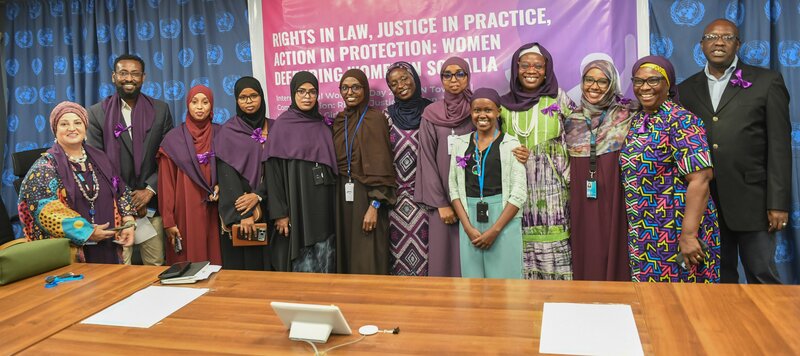
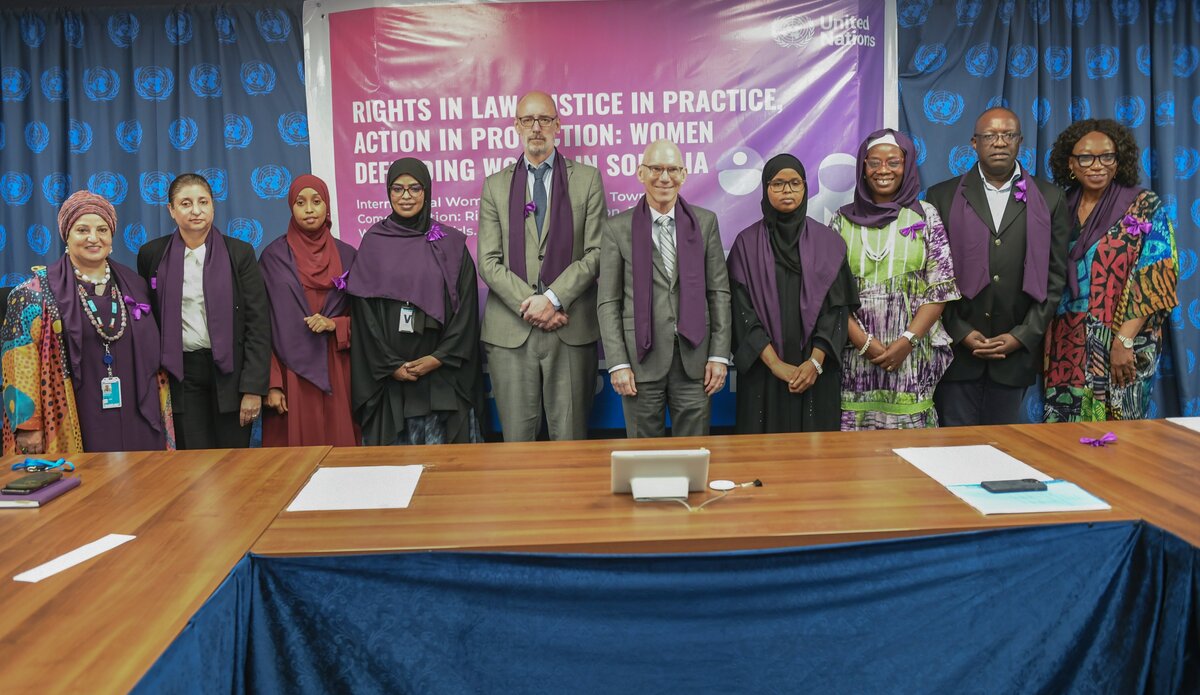
10 March 2026, Mogadishu – The critical contributions of Somali women to their country’s justice and protection systems came under the spotlight as the United Nations in Somalia marked International Women’s Day.
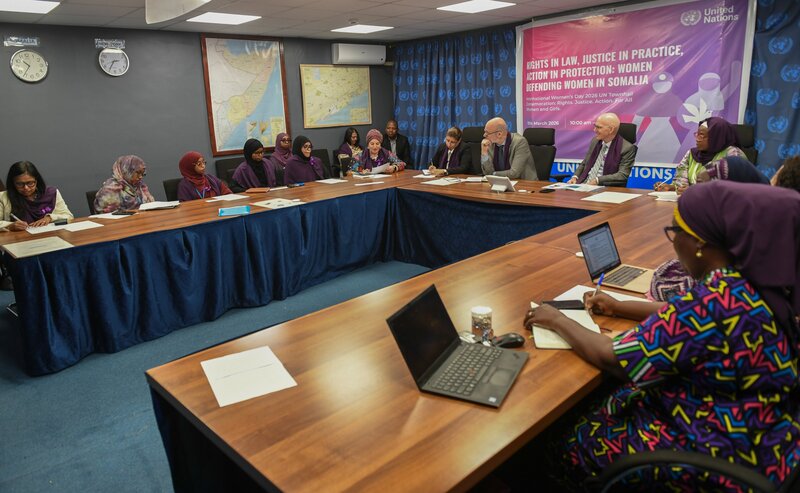
At a town hall meeting in Mogadishu, UN officials detailed strategic efforts to address the legal and social barriers facing Somali women and girls, providing a roadmap for navigating persistent challenges to gender equality across Somalia.
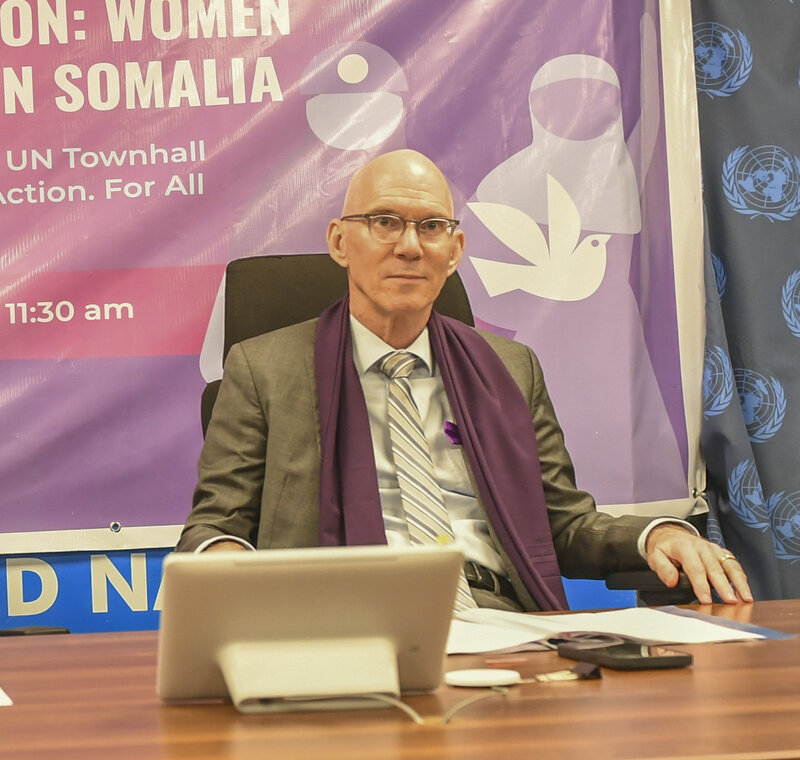
The event was attended by senior UN leaders, including the Special Representative of the Secretary-General for Somalia and Head of the UN Transitional Assistance Mission in Somalia (UNTMIS), James Swan; the Acting Assistant Secretary General and Head of the UN Support Office in Somalia (UNSOS), Qurat-ul-Ain Sadozai; the Deputy Special Representative of the Secretary-General, Resident and Humanitarian Coordinator for Somalia, George Conway; and the Country Programme Manager for the UN Women Somalia Office, Rukaya Mohamed.
UN leaders call for accelerated action on gender equality
SRSG Swan acknowledged the leadership, courage, resilience, and accomplishments of Somali women, reiterating the call for inclusion of women and girls to achieve gender equality.
“Let me reaffirm the UN’s unwavering commitment to support peace, good governance, and gender equality in Somalia. Achieving women’s rights and justice requires determination, partnership, and - above all - concrete action, and the UN will remain your steadfast partner in this essential effort,” said Mr. Swan, who further echoed the annual message of UN Secretary-General António Guterres, challenging governments and institutions to accelerate the enactment of laws, adoption of policies, and strengthening of administrative mechanisms to close persistent gender gaps.
Ms. Sadozai called for reflection on the progress achieved for women and reaffirmed a shared commitment to advancing dignity, equality, and justice for every woman and girl.
“This year’s theme - Rights, Justice, Action - reminds us that achieving gender equality requires sustained commitment and purposeful action. Across Somalia, women continue to demonstrate remarkable leadership in parliament, civil society, peacebuilding, humanitarian response, and within the justice and protection sectors - often while navigating significant barriers,” she said.
Ms. Sadozai emphasised that UNSOS operations are stronger when they are inclusive and grounded in dignity and equity.
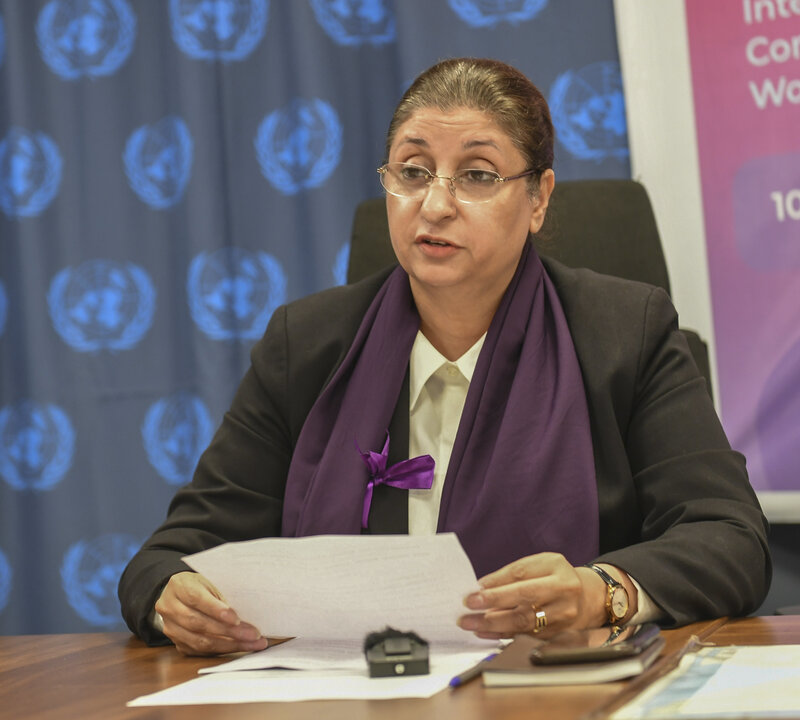
She highlighted UNSOS efforts in delivering gender training for peacekeepers, organising career fairs to support the entry of women into UN roles, hosting business seminars for Somali businesswomen seeking to partner with the UN, and the establishment of a female gym.
Progress and challenges for women in Somalia
Ms. Mohamed, from UN Women Somali office acknowledged the country’s positive trajectory toward women and girls’ empowerment despite challenges they face in their pursuit of rights and access to justice.
“A major breakthrough was the historic amendment of Somalia’s Electoral Law in November 2024, which legally enshrined a 30% quota for women for the first time ever. Women now hold 19% of parliamentary seats (52 of 274), reflecting progress while underscoring the need to accelerate towards the 30% target,” she said.
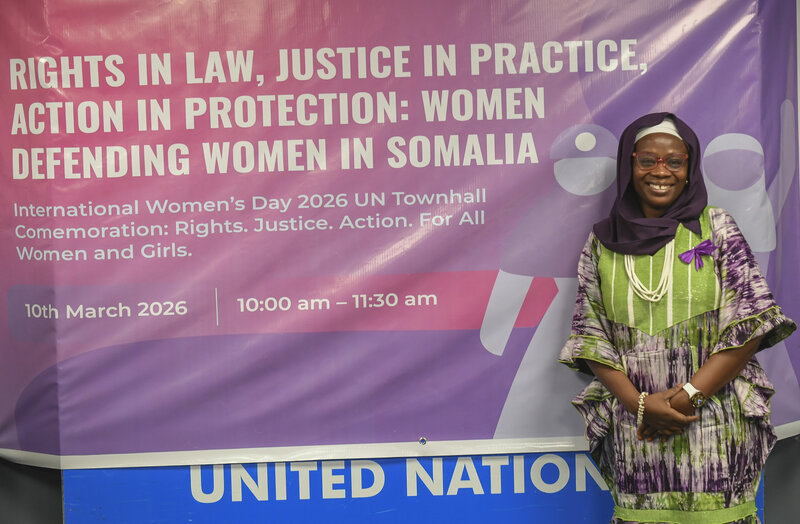
“Additionally, the first-ever legal bans on Female Genital Mutilation (FGM) in three federal member states, Jubaland, Galmudug, and Southwest, significantly advancing legal safeguards for girls.”
She lauded the UN’s commitment to supporting women in the justice sector, parliament, security services, and civil society as partners and leaders in Somalia’s development process.
Jointly organised by the UNTMIS and UNSOS and with the UN Somalia Gender Theme Group, the town hall featured a panel discussion on Somali women in the legal profession, centered on the global theme: “Rights, Justice, Action for All Women and Girls.”
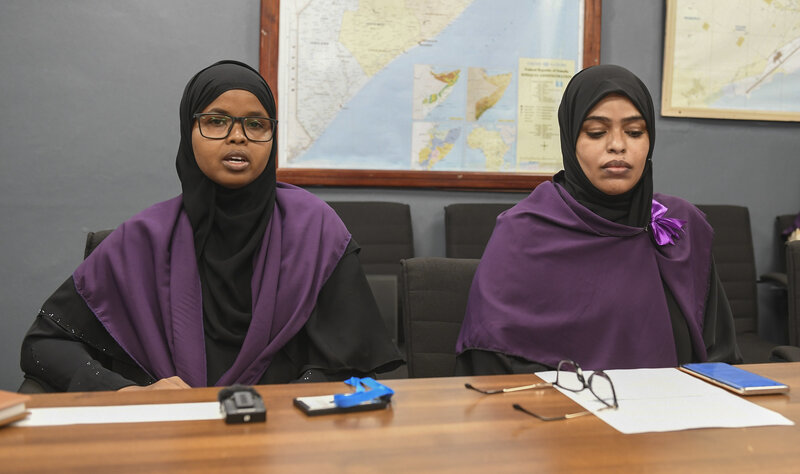
In her presentation, Maymuun Muuse Mohamed, Chief Judge of the Afgoye District Court in Lower Shabelle region, highlighted the practical challenges within the judiciary. She noted that Somalia continues to face inadequate female representation in the courts, a gap that remains a significant hurdle in effectively addressing violations against women and girls.
“For some time, unfortunately, I was the only judge. If we get women magistrates and others working at the police stations, including a woman judge, I believe that will help women’s cases to be properly addressed in a just and equitable manner,” said Judge Mohamed.