


Mogadishu, 21 May 2026 – Twenty personnel from the African Union Support and Stabilisation Mission in Somalia (AUSSOM), the Somali National Armed Forces (SNAF), and the United Nations Guard Unit (UNGU) have strengthened their ability to operate jointly in complex security environments after completing a 12-day Interoperability Training in Mogadishu from 10 to 21 May, organised by the United Nations Support Office in Somalia (UNSOS).
The programme forms part of UNSOS’s ongoing efforts to enhance coordination, interoperability, and operational effectiveness among security actors supporting Somalia’s security transition. Participants received specialised training in briefing techniques for effective communication, operations room management, operational planning, and logistics support, equipping them with practical skills to strengthen collaboration during joint operations in complex security settings.
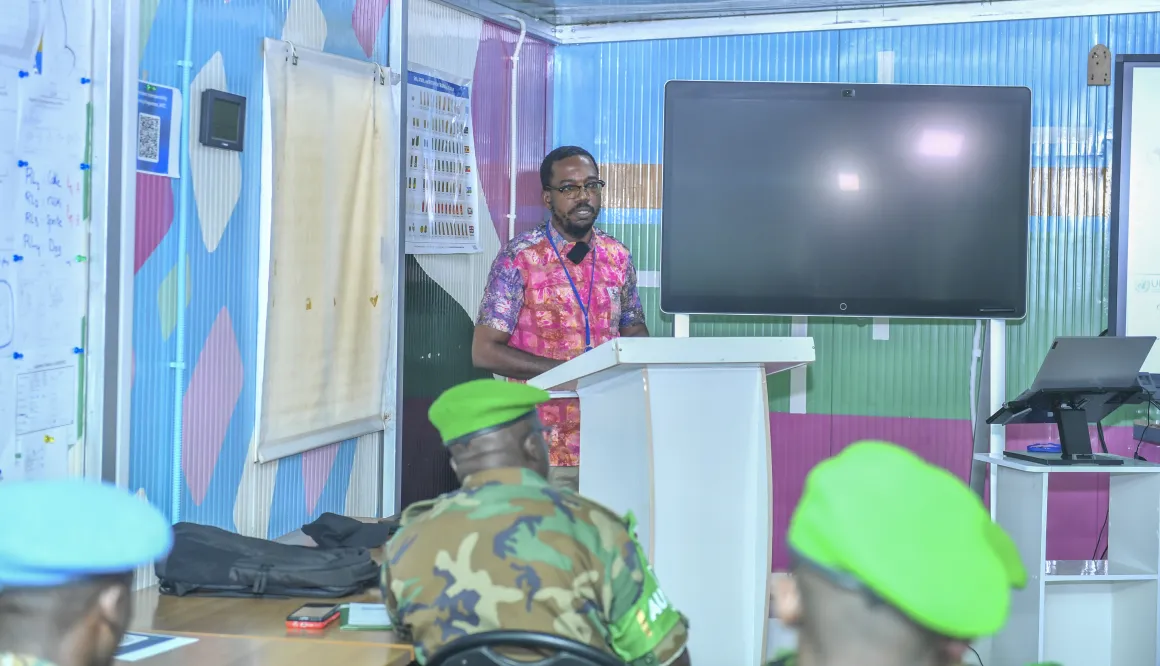
Speaking at the closing ceremony, UNSOS Chief Innovation and Technology, Alphonse Attron, reaffirmed the mission’s commitment to strengthening the professional capacity of security personnel through targeted training initiatives designed to support the achievement of mandate operational objectives.
“This interoperability training programme was designed as a strategic capacity-building initiative to strengthen coordination, decision-making, and operational effectiveness in complex, multi-agency environments,” said Attron.
He noted that the training aligns with United Nations Security Council Resolution 2809 (2025), which calls on Somalia, AUSSOM and the United Nations to strengthen joint planning, coordination and information-sharing mechanisms.
“This programme contributes to a coherent decision-making ecosystem by ensuring that planning, logistics, and operations are fully synchronised. We firmly believe that the knowledge and collaboration fostered through this training will contribute directly to Somalia’s security transition and long-term stability,” he added.
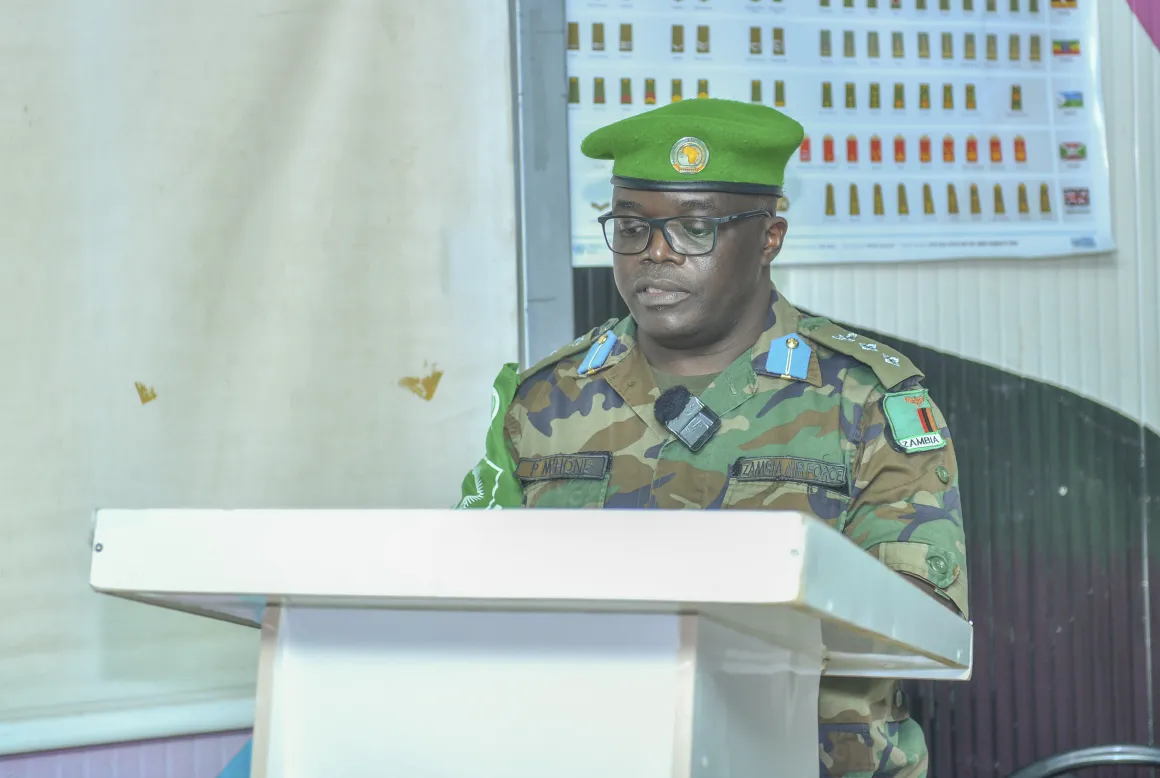
AUSSOM Chief of Communications and Acting Deputy Force Commander for Support and Logistics, Colonel Pearson Mhone, emphasised the critical role interoperability plays in achieving operational success and supporting peace and stability efforts in Somalia.
“Interoperability is not just a technical requirement; it is a strategic necessity. In a complex operational environment such as Somalia, success depends on how effectively we communicate, collaborate, and operate as one cohesive force. The ability to coordinate seamlessly across civilian, police, and military components is essential to achieving our shared objectives,” said Col. Mhone, who represented AUSSOM Force Commander Lieutenant General Sam Kavuma.
The training was described as practical, relevant, and directly applicable to operational duties. AUSSOM participants included personnel from the Ugandan contingent in Sector 1 in Mogadishu, the Djiboutian contingent in Sector 4 in Beledweyne, and the Burundian contingent in Sector 5 in Jowhar.
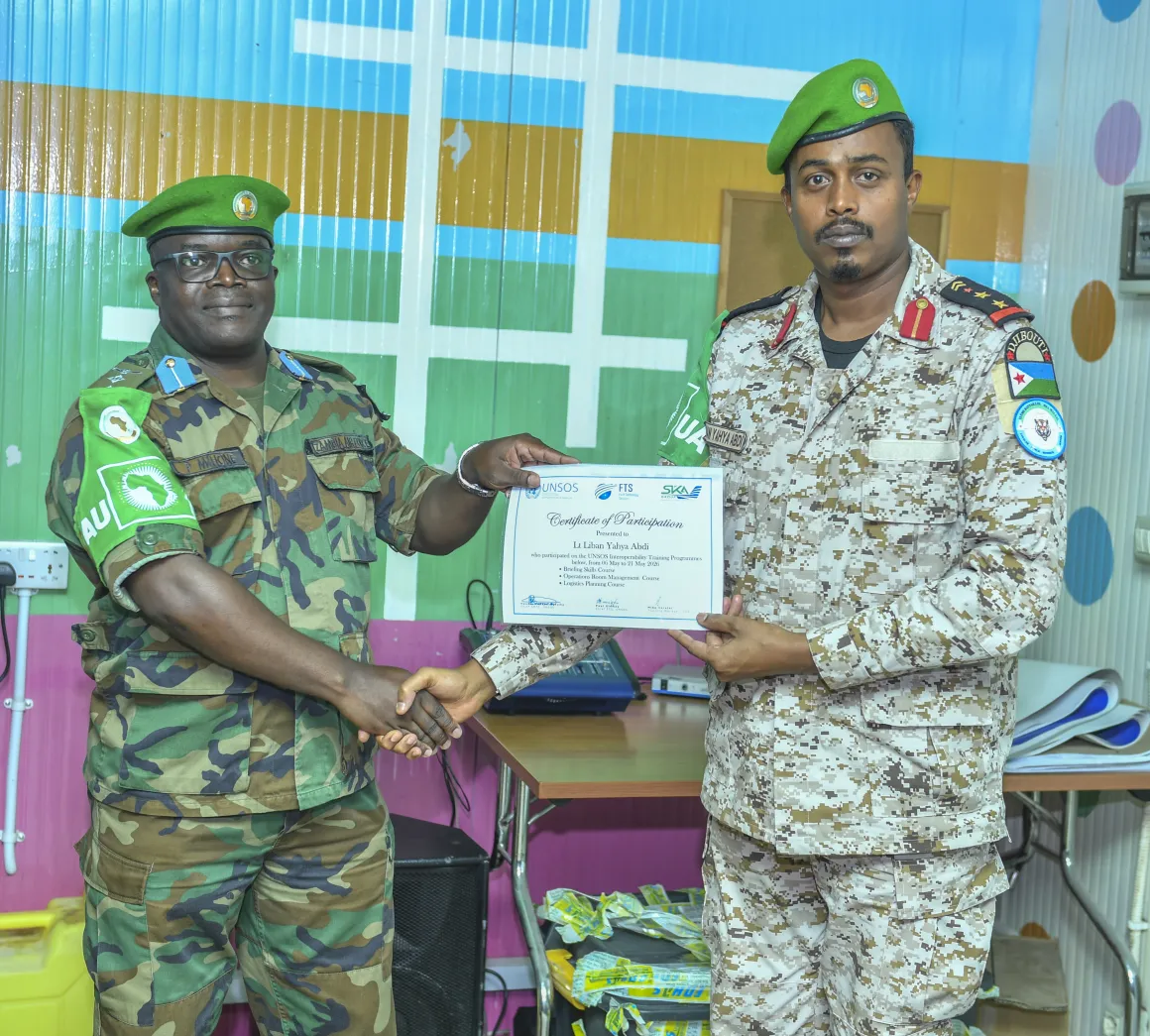
“We greatly benefited from this course because it was closely aligned with our daily duties and responsibilities. We acquired valuable skills in information briefing, operational planning, and logistics management, which will support us in the theatre of operations,” said Sector 4 Operations Officer Lieutenant Liban Yahya Abdi from the Djiboutian contingent in Beledweyne.
Second Lieutenant Sharmarke Yasin from the SNAF said the programme had strengthened his professional readiness and operational knowledge. “This course provided us with important knowledge and practical skills, including briefing techniques, operational planning, logistics management, and operational support. I would like to thank everyone who contributed to organising this training,” said 2nd Lt. Yasin.
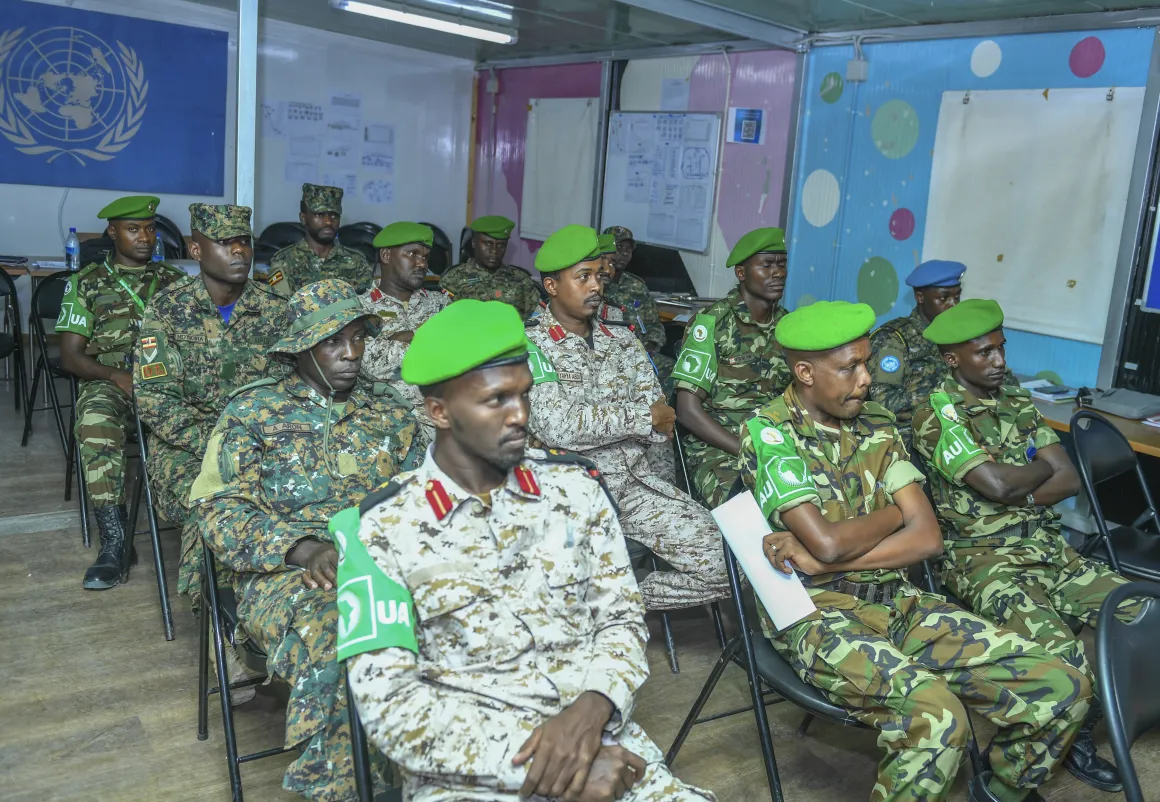
The training combined classroom instruction with practical exercises, including simulations on operations planning, radio communication and logistics coordination. Participants also conducted a field visit to the Sector 1 Headquarters Command Post and the Joint Operations Centre (JOC) in Force Headquarters, where they observed operational coordination mechanisms in practice.
UNSOS delivers these trainings through its Field Technology Services (FTS) and Integrated Mission Training Centre (IMTC), supporting Somalia’s National Transition Plan and strengthening the capacity of Somali security institutions to progressively assume full security responsibilities.


